
Habitat
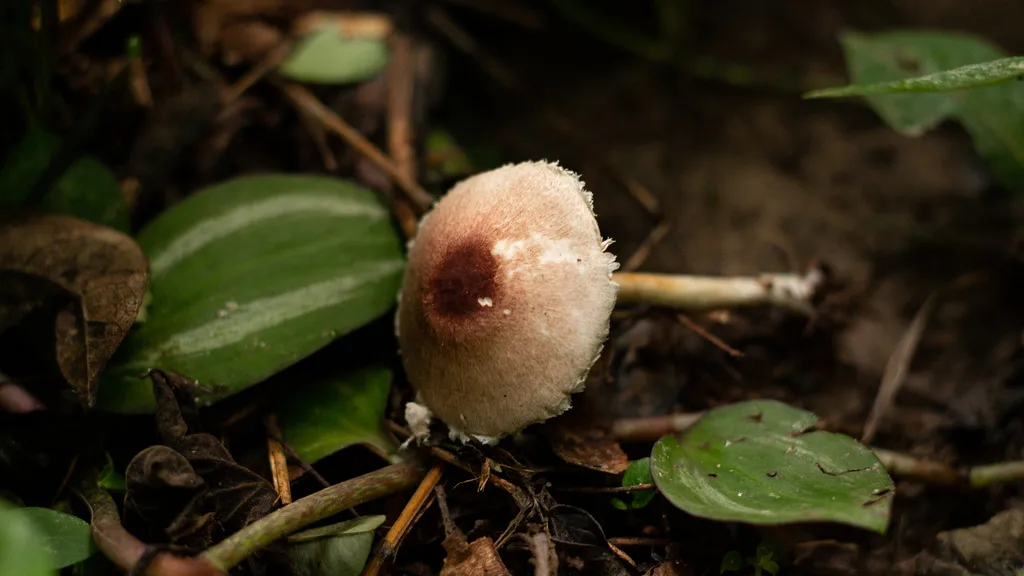
This species typically grows in deep leaf litter or amidst shredded woody debris. It is native to North America and occurs in parks.
Photos
Appearance
- Cap
- Measuring 4 to 18 centimeters wide, the cap starts hemispherical before becoming convex and eventually flat. It is often distorted and typically white with radiating lilac-colored fibers.
- Stem
- Measuring 5 to 15 centimeters long, the stem is cylindrical with a bulbous base. It is white in color and features a double ring.
- Gills
- Crowded and free from the stem, the gills transition from pale gray to pink and finally brown as they mature.
- Flesh
- White and does not change color significantly when sliced.
- Spore print
- Brown.
- Smell
- The mushroom emits a very strong aroma of almonds.
Sporecast is better in the app
Plan ahead with 10-day forecasts, see what people are finding nearby, get photo IDs, and track your finds.
Edibility
This mushroom is highly regarded for its distinct almond flavor and scent. It can be confused with various small Agaricus species, specifically the lilac mushroom, though its intense aroma is a primary distinguishing feature. Ongoing scientific research suggests it may possess medicinal properties, including immune-boosting and anti-tumor effects.
Misidentification can be fatal. Never eat a mushroom unless you're 100% sure. This information may be inaccurate. Always consult multiple sources.
Nutrient Source
otherIt is a saprobe, meaning it obtains nutrients by decomposing dead organic matter in the soil or leaf litter.
Common Names
- Danish
- Kompost-champignon
- Dutch
- Bladhoopchampignon
- English
- Almond Mushroom
Synonyms
- Agaricus brasiliensis
- Agaricus fiardii
- Agaricus rufotegulis
- Fungus subrufescens
- Psalliota subrufescens