
Habitat
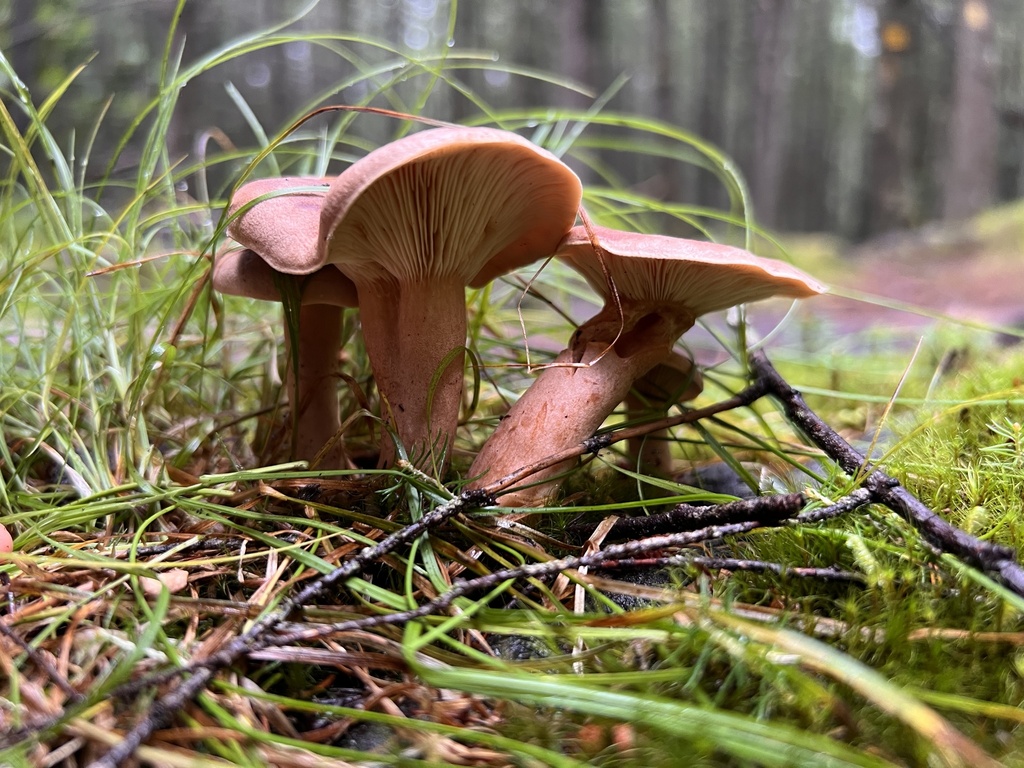
This species is primarily found in wet, acidic environments such as marshes, moors, heaths, and damp woodlands. It typically associates with conifers, particularly pine, and sometimes birch. It frequently grows in mossy areas, especially among Sphagnum.
Photos
Appearance
- Cap
- 5 to 15 cm wide, starting convex but becoming flattened with a shallow depression or funnel-shaped, often featuring a small central bump; colors range from yellowish to rosy-cinnamon or pale gray-pink, often with darker watery spots and covered in fine, woolly scales or a felty texture.
- Stem
- 3 to 12 cm long, shaped like a cylinder, spindle, or club; reddish-ochre to cinnamon in color; surface is initially downy or powdery, eventually becoming smooth and hollow.
- Gills
- Crowded and attached to the stem or slightly running down it; colors transition from pale cream or buff to a darker ochracous-yellow, sometimes with a pinkish tint.
- Flesh
- Whitish to pale buff; initially firm but becoming soft and fragile with age.
- Milk
- Distinctively clear and watery; sparse and mild to slightly bitter in taste.
- Spore print
- White to ivory, often featuring a slight pink, salmon, or ochre tint.
- Smell
- Faint when fresh but becomes intensely strong when dried, reminiscent of curry, fenugreek, maple syrup, celery, or newly mown grass.
Sporecast is better in the app
Plan ahead with 10-day forecasts, see what people are finding nearby, get photo IDs, and track your finds.
Edibility
Eating this mushroom raw can cause mild poisoning with symptoms such as chills, vertigo, and gastric upset. These toxins are reportedly destroyed by boiling, or the mushroom can be dried and powdered to be used sparingly as a spice or condiment. While the fresh taste is mild, nutty, or slightly bitter, it develops a potent smell of curry, fenugreek, or maple syrup once dried.
Misidentification can be fatal. Never eat a mushroom unless you're 100% sure. This information may be inaccurate. Always consult multiple sources.
Nutrient Source
EctomycorrhizalIt forms a symbiotic relationship with the roots of trees, exchanging nutrients with them.
Common Names
- Danish
- Mose-mælkehat
- Dutch
- Viltige maggizwam
- English
- Fenugreek Milkcap
- Finnish
- lakritsirousku
- French
- Lactaire à odeur de céleri
- German
- Maggipilz
- Norwegian Bokmål
- lakrisriske
- Norwegian Nynorsk
- lakrisriske
- Spanish
- lactario marrón amarillento
- Swedish
- lakritsriska
- Welsh
- Cap Llaeth Dwn
Synonyms
- Agaricus helvus
- Agaricus tomentosus
- Galorrheus helvus
- Lactarius aquifluus
- Lactarius tomentosus
- Lactifluus aquifluus
- Lactifluus helvus