
Habitat
This species is found on soil, growing in a symbiotic relationship with poplar trees. It typically grows either alone or in small clusters.
Photos
Appearance
- Cap
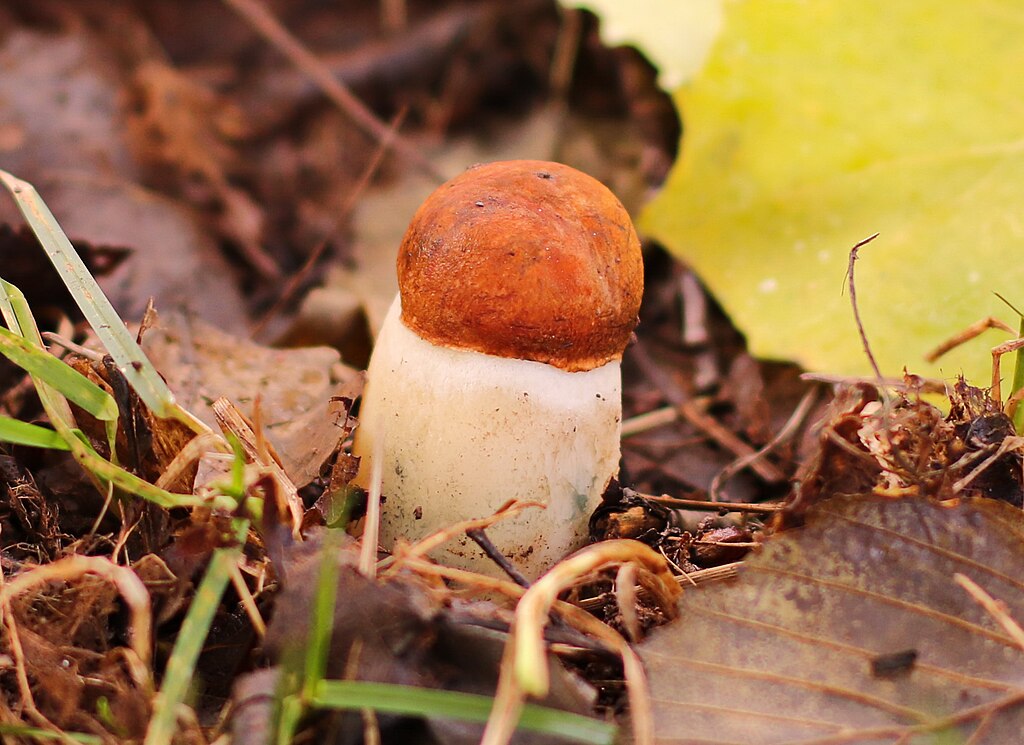
- Large, measuring 8 to 25 cm across; transitions from hemispherical to convex and eventually flat. The surface is smooth or finely downy, later developing small scales. The margin typically features small, triangular flaps of overhanging tissue when young.
- Stem
- Grows 5 to 27 cm long and is cylindrical or swollen at the base. It is covered in white, woolly scales that turn rust-red as the mushroom matures.
- Pores and Tubes
- Pores are very small and angular. Both the tubes and pores are creamy white to pale brown, especially where bruised. The tubes are attached to the stem.
- Flesh
- Firm and white, changing to reddish-grey and eventually blackish when bruised; the base of the stem often turns blue-green.
- Spore print
- Ochre-buff.
Sporecast is better in the app
Plan ahead with 10-day forecasts, see what people are finding nearby, get photo IDs, and track your finds.
Edibility
This mushroom is easily confused with Leccinum aurantiacum, which is distinguished by its lack of white stem scales when young. The flesh changes color from white to red-grey or blackish when bruised and may turn blue-green at the base of the stem. It has a mild and pleasant taste and smell.
Misidentification can be fatal. Never eat a mushroom unless you're 100% sure. This information may be inaccurate. Always consult multiple sources.
Nutrient Source
EctomycorrhizalIt forms a symbiotic relationship with trees, exchanging nutrients through their root systems.